
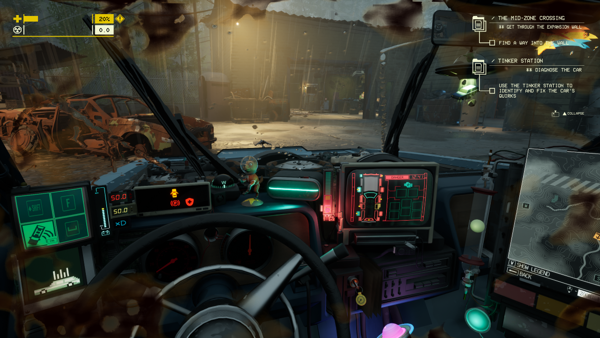
Pacific Drive doesn’t treat your vehicle as just a way to get from point A to B. The game injects randomness through its “quirk” system, throwing unpredictable problems into your drives—flat tires, sparking wires, and yes, doors popping open at the worst moments. One of the most common player complaints is the front left door that won’t stay shut, swinging wide during acceleration, turns, or sometimes for no obvious reason at all.
The good news? While this is frustrating, it isn’t a bug. The Pacific Drive left door keeps opening specifically because of how the game mixes car maintenance with the unpredictable danger of the Zone. Instead of fighting the system, you’ll get further by understanding how it works and approaching it strategically.
Understanding Car Quirks in Pacific Drive
Pacific Drive revolves around the hazards of a mysterious area called the Zone—a place where the laws of nature go sideways and your car picks up weird traits over time. These traits are called quirks. Rather than standard wear and tear, quirks are deliberate, randomized malfunctions created to amp up the challenge and keep everyone on their toes.
For example, you might discover your headlights flick on whenever you apply the brakes, the trunk pops open on sharp turns, or—most often discussed—the left door opens itself after you hit the gas. Because quirks are random, no two cars malfunction in the same ways, and no two playthroughs feel identical. That’s part of the magic.
The effects on gameplay are direct but never destructive for destruction’s sake. You’re forced to adapt, notice patterns, and, over time, get smarter about conducting repairs and staying alert during your runs in the Zone.
Causes Behind the Left Door Issue
Why does the left door keep opening? The basic answer comes down to Pacific Drive’s anomaly system. As you spend more time pushing through the Zone, your car “absorbs” odd connections: a cause (like turning right, accelerating, or flicking on the radio) triggers an effect (like the left door swinging open).
This is important: The opening door usually starts after you return from a run into the Zone or take heavy environmental damage. Sometimes, the issue develops very slowly—nothing happens for miles, then suddenly every right turn flings the door open, with rain or mutant lightning pouring in. Other times, the quirk shows up as soon as you get behind the wheel after a run.
Several triggers may be possible:
- Accelerating causes the left door to open.
- Steering right or left triggers the door.
- The door opens on bumpy terrain or at set intervals.
No matter the source, the link between the trigger and the effect stays obscure unless you take the time to isolate it.
Steps for Diagnosing the Problem
Think of yourself as a detective. First, start with careful observation. When does the left door pop open? Do you notice it only on acceleration, or does it open if you press the brakes too?
Keep a log—or mental note—of the moments it happens. Say, for the last three miles, the door only opens when you push the gas down hard while climbing a hill. That’s a pattern. Track how the issue surfaces: speed, turning, braking, or even time spent idling. Don’t assume the most obvious answer.
Tip: Sometimes it’s tempting to blame whatever you did just before the problem occurred. In Pacific Drive, randomly assigned triggers mean you can’t always trust your first guess.
Diagnosing accurately will save you materials, time, and repeat trips to the repair shop.
Using the Tinker Station for Solutions
Now that you have your likely trigger in mind, it’s time to consult the Tinker Station. You’ll only find this in the Auto Shop back at base—it’s not portable, so be prepared to get your car to safety before you start repairs.
The Tinker Station functions as a problem-solving interface. Here’s how it works:
- You input what you suspect is the “cause” (“accelerating”) and match it to the “effect” (“left door opens”).
- The system checks your guess. If you’re correct, it notifies you and reveals the type of repair required.
- If your guess is wrong, the station just resets—no penalties, but you’ll need to gather more clues.
Tip: The game encourages deduction, but also a bit of trial and error. Don’t be afraid to try several logical combinations based on your observations. The result is a process that feels closer to real troubleshooting than just clicking a button and watching an animation.
Fixing the Left Door Opening Quirk
Once the Tinker Station identifies your cause-and-effect pair, it’ll suggest the right way to patch up your vehicle. Most quirks related to the doors require the Mechanic’s Kit or sometimes an Electrician’s Kit, both obtained through scrounging or crafting.
Here’s how to proceed:
1. Use the correct kit as instructed. This often means targeting the affected area while your car is parked in the Auto Shop.
2. Follow the game’s prompts for the repair sequence.
3. Once the work is complete, immediately take the car for a short drive, running through the action you think was the trigger—such as accelerating hard, then cruising, then braking.
Key takeaway: Never assume the repair worked just because the Tinker Station said “Success!” Always test the actual behavior during a drive.
If the left door flings open again, reassess your diagnosis. Maybe the trigger wasn’t acceleration—it might be turning left instead, or using the headlights at night. Go back, enter your new guess into the Tinker Station, and repeat. Precision beats speed here.
Troubleshooting Tips for Persistent Door Problems
If you’re stuck in an endless cycle of repairs, try slowing down. Focus on small details. Did the door open only while driving over bumps? Did it pop open after honking? Sometimes the trigger can be less obvious than you’d expect.
Tip: Upgrading your Tinker Station in the Auto Shop can make diagnosing quirks more convenient. Some upgrades allow the system to suggest the top two or three potential causes, reducing the amount of guesswork required. While this never eliminates quirk management completely, it streamlines the process.
Another way is to check community forums and player guides. Many share pattern observations, like “the left door usually opens on long straightaways after storms.” Think ahead: write down or screenshot your triggers and fixes for future runs. You’ll build your own troubleshooting library, saving effort the next time quirks arise.
Community Insights: Why This Quirk Matters
There’s a reason you see so many conversations about the left door opening. It frustrates new players and veterans alike, not because it’s a glitch, but because it demands attention and pattern recognition. Many players recount epic near-misses—an opened door at the wrong time invites rain, debris, or even Zone anomalies inside.
However, the randomness behind these issues is by design. The Pacific Drive “quirk” system forces resourcefulness. You learn to keep repair kits handy, watch out for odd behaviors, and listen for telltale audio cues. These small challenges become stories players share, showing off ingenuity as much as endurance.
Some see this as a growth opportunity. One player joked, “After my fifth left-door incident, I just started driving with one hand on the toolkit.” Others discuss the teamwork required to diagnose and fix in co-op play, where communication about quirks can make or break a run.
Engage with the mechanic, rather than fighting against it. It’s part of what keeps Pacific Drive compelling, memorable, and socially rich.
Tip: For more insights on effective troubleshooting and sustainable growth, check out BizRiseUp—practical business advice sometimes overlaps with good route-planning and smart diagnostics.
Summary Table: Addressing the Left Door Opening Quirk
| Step | Description |
|---|---|
| Identify Trigger | Observe when the door opens (e.g., acceleration, turning right) |
| Visit Tinker Station | Go to the Auto Shop and access the Tinker Station |
| Diagnose | Input suspected cause/result combo (e.g., “accelerating opens left door”) |
| Fix | Use recommended repair kit to remove the quirk |
| Test | Drive and verify issue is resolved |
If the left door still won’t stay closed, circle back and try a new trigger-symptom guess. The process is as much about paying attention as using the right tool.
Conclusion: Turning a Frustration into a Learning Moment
Pacific Drive’s quirks—like the left door that keeps opening—aren’t roadblocks. They’re opportunities to slow down, sharpen your observation, and develop a resilient mindset. Every unpredictable malfunction teaches a bit about risk, discipline, and problem-solving.
Start by tracking the door-opening moments. Use the Tinker Station to test your hunches. Fix, test, and keep improving your approach. There’s no shortcut, but with each repair cycle, you’ll reduce guesswork and build confidence.
In the process, you’ll find that what begins as a nuisance turns into a signature part of the experience. The Zone becomes less intimidating, and your car, quirks and all, starts to feel like a true (if temperamental) partner on the road.
Whether you’re a cautious tinkerer or a risk-taker, Pacific Drive rewards those who turn setbacks into stories. Treat the next left-door surprise less like a failure and more like a signal to think smarter, not just faster. That’s problem-solving you can use in any venture—under the hood or beyond.
Also Read: