
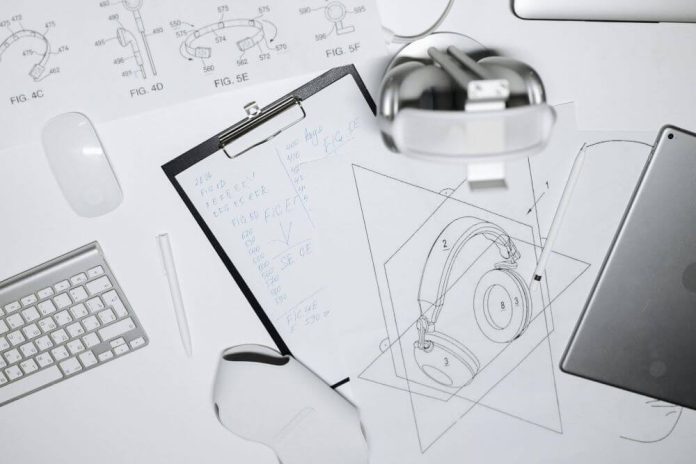
A launch can stall long before a customer ever sees the product. 3d product rendering services change that timing because marketing no longer has to wait for tooling, shipping, or a camera-ready prototype. Photorealistic 3D product rendering allows a product to start selling while it is still moving through engineering review, sourcing, or factory setup. That shift matters because the market moves faster than most production calendars. Salsify reported in 2025, based on a survey of 1,910 U.S. and U.K. shoppers, that 77% of shoppers connect product images and videos to their decision to complete a purchase. If the visuals are missing, the delay is not just an operational issue. It is commercial. Strong renders turn launch planning into a parallel process rather than a long chain of handoffs.
The “Measure Twice, Cut Once” Philosophy in Digital Prototyping
Manufacturers have always known that one mistake made early becomes expensive later. The same logic applies to product visuals. A high-fidelity render serves as a final visual inspection before money is locked into molds, finishes, or large material orders. It can reveal that a matte polymer looks cheap under soft light, or that a brushed metal option feels colder than the brand intended. 3d product modeling and rendering services are useful because they let teams check those details at full scale rather than as isolated swatches in a sample box. That matters when the wrong surface texture, tone, or trim choice could turn into thousands of flawed units. Fixing a rendering file is manageable. Fixing a bad production run is not.
Bridging the Gap Between Manufacturing and Marketing
Marketing teams often lose weeks in the gap between approved design and finished inventory. The factory is working, but the campaign still has nothing to publish. A 3d product rendering studio closes that gap by building launch assets directly from CAD data, engineering drawings, or early design files. That means a speaker, chair, skincare bottle, or wearable device can be virtually lit, staged, and delivered for ads while its physical counterpart is still being assembled. The workflow is simple in theory and powerful in practice: engineering keeps refining the product while marketing already has hero shots, detail crops, and catalog angles. Dead time disappears. And when launch windows are tight, removing that dead time is often more valuable than cutting a few dollars from production.
Pre-Order Success through Photorealistic 3D Product Rendering
Pre-orders only work when the buyer believes the promise. That is why photorealistic product rendering services matter so much in early campaigns. A believable image does more than look polished. It answers quiet questions about finish quality, assembly, proportions, and trust. Brands can show an exploded view, a transparent housing, or a full set of colorways without building separate physical samples for each variant. That visual clarity helps justify the buy-now decision before hands-on reviews exist. It also supports cash flow, which is often what production needs most at that stage. Shopify says products with AR and 3D content can see conversion rates up to 94% higher, and Salsify’s 2026 research found that 68% of shoppers paid more for products from brands they trust. Credibility sells before inventory does.
Reducing the Financial Risk of Inventory and Material Mistakes
Rendering is not only a design tool. It is a low-cost way to test demand before a brand commits to inventory. A team can compare three finishes, five colorways, or two packaging materials online and see which version actually draws attention. 3D product visualization services make that test easier by creating campaign-ready variations quickly enough for real decision-making. If a glossy black version gets ignored while a warm stone finish performs well in paid ads or email clicks, purchasing can react before placing the large order. That reduces the chance of sitting on an unpopular stock that looked good in theory but weak in the market. In practice, rendering works like insurance against taste errors, material mistakes, and slow-moving inventory.
Core Advantages of Integrating 3D Assets into the Launch Cycle
The biggest gain is not one image. It is the system around the image. A reliable 3D rendering service provides launch teams with a reusable digital asset that can move across channels, markets, and formats without repeating the entire production cycle. Shopify case data from Rebecca Minkoff also showed that shoppers who interacted with a 3D model were 44% more likely to add an item to cart and 27% more likely to place an order. That helps explain why one strong asset can do more work than a rushed photo shoot.
- Instant creation of lifestyle imagery without renting a physical studio or hiring a crew.
- Ability to update product labels or colors across all marketing assets in minutes if a design change occurs late in production.
- Total control over environmental factors like lighting and reflection that are difficult to manage in real-world shoots.
- Early integration of product visuals into AR apps for try-before-you-buy experiences.
- High-resolution output suitable for everything from social ads to oversized trade show graphics.
- Seamless creation of 360-degree spins and animations that can improve product-page engagement and help conversion.
That kind of flexibility is hard to match once a campaign depends on physical samples and fixed photography dates.
Global Consistency and Scalability of Brand Assets
Shipping prototypes across regions for local shoots creates a messy chain of risks, costs, and inconsistencies. Samples get delayed, damaged, or photographed differently from market to market. A 3d product visualization company removes most of that friction by giving every regional team access to the same master asset. From there, backgrounds, shadow style, packaging language, or campaign framing can be localized without changing the product itself. That matters for brand integrity. A customer in Berlin, Dubai, or Toronto should not feel as if they are looking at three different products simply because three photo teams interpreted the item differently. Digital files scale cleanly. Physical prototype logistics usually do not.
The ROI of Virtual Photography versus Traditional Shoots
Traditional product photography can become expensive fast. There is prototype shipping, insurance, set design, studio rental, crew time, retouching, and often reshoots when the product changes late. A 3d product rendering company can cost less over the full launch cycle because the core model stays useful long after the first campaign ends. A 3d product rendering agency can also repurpose that same asset for ecommerce pages, ads, trade show graphics, retailer sell sheets, and seasonal updates without rebuilding the visual foundation each time. The return is not only financial. It is strategic. If a brand reaches the market weeks earlier with premium assets already live, that time gain can shape preorder volume, retail interest, and category visibility before slower competitors are ready.
Overcoming the Limitations of Physical Prototyping
Physical prototypes are often awkward to photograph. Some are fragile. Some are unfinished. Some work only partially, which makes them hard to pose, light, or trust on camera. 3d rendering services of products bypass those limits by showing the product as it is meant to exist, not as it happens to look during an early build stage. That makes it easier to present clean seams, ideal materials, transparent housings, or controlled cutaway views that a lens cannot capture well. Realistic 3d product rendering services are especially helpful for technical products because they can highlight airflow paths, internal components, layered materials, or closure systems without turning the visual into a confusing engineering diagram. In some cases, the render communicates design intent more honestly than the first physical sample.
Conclusion
The launch cycle changes when visuals no longer wait for manufacturing to finish. Teams can review materials earlier, catch aesthetic errors sooner, prepare campaigns in parallel, and build preorder demand before inventory is ready to ship. That is a real operational advantage, not a cosmetic one. It reduces waste, trims idle time between departments, and gives decision-makers better information when the stakes are highest. It also helps brands present a product with more clarity than an early prototype can usually offer. As customer expectations keep rising, the brands that move fastest will usually be the ones that visualize first and manufacture with fewer surprises. In that model, speed is not reckless. It is planned. And it often starts with a credible, carefully built photorealistic 3d product rendering.